
A common concern many of my clients have is whether laser hair removal is dangerous. The answer is no: laser hair removal is considered very safe. But the specific fears people bring in deserve specific answers, not reassurance.
The Radiation Question
One of the biggest misconceptions is that laser hair removal exposes you to harmful radiation.
In reality, laser hair removal uses non-ionizing radiation. This is a meaningful distinction. X-rays and CT scans use ionizing radiation, which carries enough energy to affect DNA. The light used in laser hair removal does not have that ability.
Laser hair removal sits in the same general category as visible light. It is light energy tuned to a specific wavelength.
Can It Reach My Organs?
No. The laser targets the pigment in the hair follicle and does not penetrate deep enough to affect your organs or other internal tissues.
Hair follicles sit in the upper layers of the skin. The energy is designed to be absorbed there, by melanin in the hair, and to stop there. It is not reaching anything beyond the follicle.
What Laser Is Actually Doing
Understanding the mechanism makes the safety picture clearer.
Laser fires light that is absorbed by the melanin, the pigment, inside the hair. That absorbed light converts to heat, and the heat damages the follicle's ability to produce hair. That is the whole process.
This is also why laser only works on pigmented hair. White, gray, blonde, and red hairs do not contain enough melanin for the laser to target, which is why we use electrolysis for those.
What About Burns?
This is a fair concern rather than a myth, and the honest answer is that it depends entirely on the equipment and the operator.
Older laser technology had a harder time distinguishing between the melanin in the hair and the melanin in the skin. That is why people with darker skin tones historically had a higher risk of burns, and that history is why the fear persists.
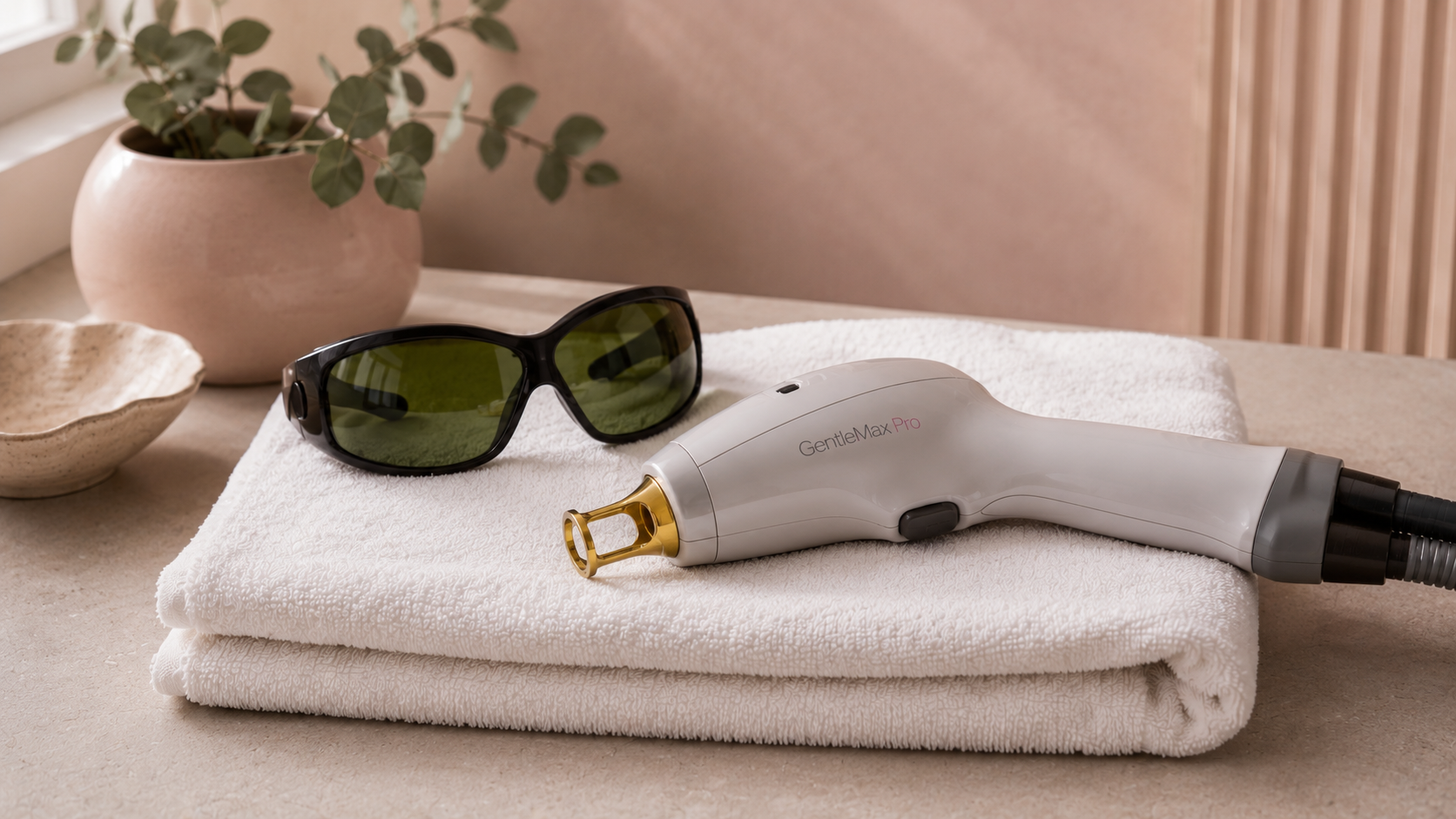
Today, laser hair removal is safe and effective for all skin tones when the right wavelength is used. We use the Candela GentleMax Pro, which houses two lasers:
- Alexandrite (755 nm) for Fitzpatrick skin types I–III. It penetrates deeply and is highly attracted to pigment in dark hair, producing excellent results on lighter skin tones.
- Nd:YAG (1064 nm) for darker and more pigmented skin. It bypasses more of the skin's pigment while still targeting the follicle, providing excellent results with a lower risk of skin injury.
Having both in one machine means every treatment can be customized to your skin tone and hair type.
The other half of the answer is settings. Darker skin contains more melanin, so settings need to start lower and be adjusted carefully. A burn on skin with more melanin also carries a higher chance of hyperpigmentation in that area, which is precisely why appropriate settings matter so much.
Cooling and Comfort
Our Candela GentleMax Pro includes a built-in cryogen cooling system that cools the skin before the heat of the laser reaches it. We also use cold compresses during treatment to minimize heat spreading into surrounding tissue.
This does two things: it makes treatment more comfortable, and it reduces the risk of heat affecting fine hairs nearby, which matters for preventing paradoxical hair stimulation on the face.
Do Higher Settings Mean More Risk?
With laser, higher settings genuinely do give better results, the stronger the laser, the more effectively it destroys the follicle. But because there is a real risk of burning the skin, settings must be increased gradually.
You cannot start at a high setting. The goal is to go as high as possible to kill the hair efficiently, with no damage to the skin, and that means building up over the course of your treatment plan.
Interestingly, higher settings later in your plan do not usually mean more pain. In many cases treatments become more comfortable as you progress, simply because there is far less hair present to absorb energy.
What About At-Home Laser Devices?
I understand why at-home devices seem appealing, but they do not deliver the same results as professional treatment.
Most at-home devices use IPL (Intense Pulsed Light), which is considerably less powerful than the medical-grade lasers used in a professional setting. If at-home devices were just as effective, there would be no reason for clinics to invest over $100,000 in medical laser equipment or to require specialized electrical installations to run them.
Professional treatments are also safer, because someone trained is assessing your skin and hair type and selecting the correct settings. Using an at-home device incorrectly increases the risk of burns, hyperpigmentation, and poor results.
In the long run, many people end up spending more time and money chasing results that professional treatment delivers far more efficiently.
Side Effects You May Actually See
Hives. Hives after laser are normal and common, especially during early sessions. They can actually be a positive sign: it means the laser is successfully targeting the follicle. The follicle essentially exploded inside the pore, which causes temporary bumps and hive-like swelling lasting a couple of minutes. If you apply heat to the area the same day (hot showers, saunas, intense exercise), these reactions can return and may feel itchy. This is why we ask you to avoid heat for the rest of the day.
Acne. Uncommon and rare, but possible. Heat from the laser can affect bacteria naturally present on the skin, and if the skin was not properly cleansed before treatment, it may contribute to temporary breakouts lasting a few days. Come in with clean skin and skip heavy oils and lotions beforehand.
The Bottom Line
Laser hair removal uses non-ionizing light energy that cannot damage DNA and does not penetrate to your organs. The genuine risks, burns and pigmentation changes, come from the wrong wavelength or the wrong settings, not from laser as a technology.
Ask any clinic you are considering in Brooklyn which laser they use and which wavelength they will use on your skin tone. If they cannot answer that clearly, that tells you something.
Related reading
- Laser Hair Removal for Dark Skin: Why the Right Laser Changes Everything
- How to Prepare for Laser Hair Removal (and What to Do After)
- Can Laser Hair Removal Cause More Hair Growth?
Have a question this didn't answer? Book a free consultation at our Midwood, Brooklyn studio or call 718-360-2902. We'll look at your hair and skin, answer everything, and build a plan with you.